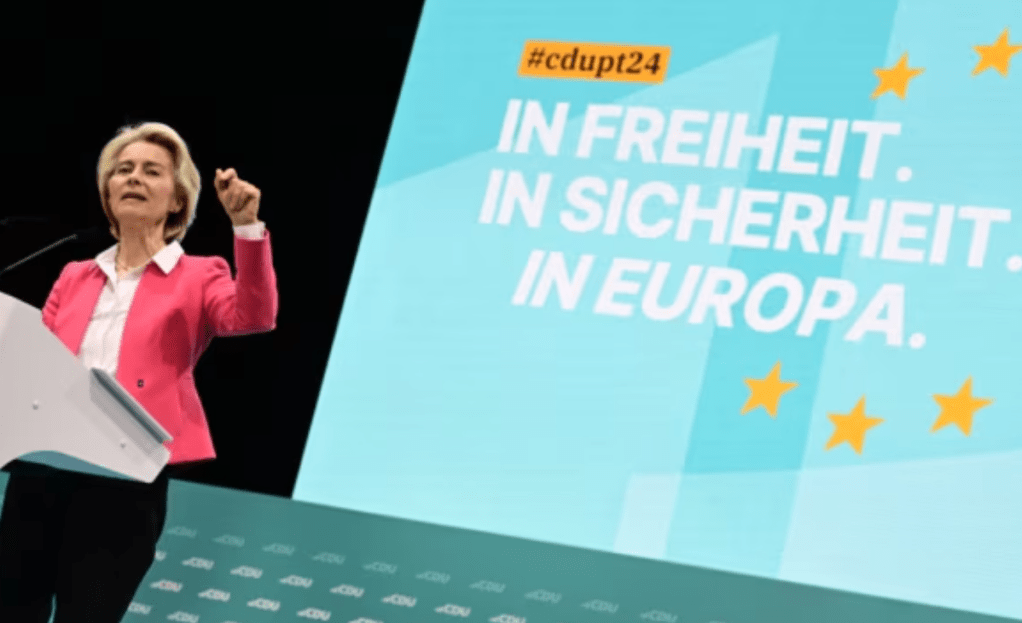
Von der Leyen warns again: Chinese electric cars must be prevented from flooding the EU market on May 8. But will she succeed?
On May 7, 2024, amidst the snow and wind at the Tourmalet Pass in the Pyrenees province of France, French President Emmanuel Macron hosted a unique welcome ceremony for the Chinese President. This event was not merely a diplomatic courtesy but also a significant symbol of the evolving relationship between China, France, and Europe as a whole. This visit was part of a six-day European tour, covering France, Serbia, and Hungary, with each country extending the highest level of hospitality.
In the current international landscape, the strategic interplay between China, the United States, and Europe has become increasingly intense. In recent years, China has rapidly advanced in new industries such as electric vehicles, wind energy, and solar energy, posing substantial challenges to traditional industries in Western countries. The United States was the first to impose a 100% tariff on Chinese electric vehicles, aiming to prevent their entry into the American market. Following suit, the European Union launched anti-dumping investigations into Chinese electric vehicles. These actions reflect the Western nations’ heightened vigilance and defensive stance towards China’s burgeoning industries.
Against this backdrop, the primary objective of the Chinese President’s visit to Europe is to ensure that the EU does not follow the U.S. in imposing trade sanctions on China’s emerging industries. By deepening economic cooperation between China and Europe, the aim is to solidify China’s strategic partnerships in Europe and pave the way for its global strategy. France, as a key member of the EU, plays a crucial role in this dynamic. Macron’s welcome ceremony at the Tourmalet Pass not only showcased Franco-Chinese friendship but also signaled France’s diplomatic stance in the current international climate.
This visit encompasses discussions on economic issues as well as a wide range of political and strategic topics. China seeks to collaborate closely with European countries to dilute U.S. influence on the international stage and gain more support in global affairs. On the European side, despite pressures from the U.S., many countries are keen to reap the economic benefits and strategic advantages of cooperating with China.
The delegation accompanying the Chinese President on this visit is composed of three distinct groups, each reflecting different focal points of the trip.
The first group includes officials from the General Office of the Central Committee of the Communist Party of China, such as Director Cai Qi and Deputy Director Kong Shaoxun, responsible for providing comprehensive support and services to the President.
The second group comprises economic officials, including the Ministers of Commerce, Finance, the National Development and Reform Commission, and the General Administration of Customs. Their presence underscores the economic focus of this visit, particularly the maintenance and deepening of China-EU trade relations.
The third group consists of diplomatic officials, including Foreign Minister Wang Yi, Deputy Minister Deng Li, and Assistant Minister Hua Chunying, highlighting the significant diplomatic implications of this visit.
Accompanying business leaders primarily represent the electric vehicle and new energy sectors, with senior executives from companies such as EVE Energy, CATL, and NIO. This contrasts sharply with the President’s previous visit to the United States, which featured executives from major internet companies, indicating a strategic shift in China’s economic focus from the internet sector to emerging industries like electric vehicles and renewable energy.
Meanwhile, France, as the only permanent member of the UN Security Council within the EU, has long maintained an independent foreign policy, often playing a unique role both within and outside the EU. During the Chinese President’s visit to France, he held multiple meetings with President Emmanuel Macron, resulting in the signing of four joint statements covering a wide range of issues from the Middle East to economic cooperation. This not only reflects the common stance of China and France on many international affairs but also demonstrates their willingness to deepen bilateral cooperation.
In terms of economic cooperation, the sixth meeting of the China-France Business Council was a highlight of the visit. During this meeting, the two sides reached 15 commercial agreements in fields such as nuclear power technology, aerospace manufacturing, and new energy. China is purchasing nuclear power technology from France, while France has secured significant participation in China’s subway projects. Moreover, Chinese companies like BYD plan to open numerous stores and establish factories in France. These collaborations not only bring economic benefits to France but also lay a solid foundation for the further development of China-France relations.
Following the visit to France, Serbia emerged as a crucial partner for China in the Balkan region, with both countries maintaining close cooperation across multiple domains. China announced the establishment of a free trade zone in Serbia, allowing 90% of Serbian goods to enter the Chinese market duty-free. Although Serbia’s economy is relatively small, this cooperation holds significant demonstrative effects, showcasing the potential benefits of partnering with China to other nations. Serbia’s stance on the Kosovo issue parallels China’s position on Taiwan, with both countries supporting each other, forming a strong political alliance. Through its collaboration with Serbia, China has not only established a key political partner in the heart of Europe but also highlighted a successful example of the Belt and Road Initiative.
Hungary is poised to become the rotating presidency of the European Union, granting it considerable influence within the EU. The relationship between China and Hungary is notably close, with Hungary being regarded as a “Chinese ally” within the EU. By setting up factories and making substantial investments in Hungary, China has secured a strategic foothold to access the EU market and can play a critical role in countering unfavorable EU policies towards China. During the visit to Hungary, both sides signed a series of economic cooperation agreements, including the establishment of a CATL battery plant and a BYD assembly plant in Hungary. These investments not only bolster Hungary’s economic development but also provide Chinese companies with a way to bypass EU tariffs, facilitating their entry into the European market.
China’s strategic planning in Europe, as highlighted by the recent tour, achieves its goals through a multi-layered approach. By deepening ties with France, China ensures a robust ally within the EU, leveraging France’s influential role to counterbalance U.S. pressures. This is evidenced by the signing of significant bilateral agreements in various sectors, reinforcing economic interdependence. In Serbia, China’s establishment of a free trade zone and alignment on political issues like Kosovo underscores its strategy of building strong alliances with smaller nations, thereby showcasing the benefits of cooperation with China. Hungary’s upcoming EU presidency and close economic ties with China, marked by substantial investments in new energy sectors, provide China with a strategic foothold within the EU, enabling it to bypass potential trade barriers. These concerted efforts not only secure immediate economic benefits but also create a network of political and economic support that aligns with China’s long-term global strategy, ensuring sustained growth and influence in the face of Western challenges.

 Yuxin Hu
留下评论