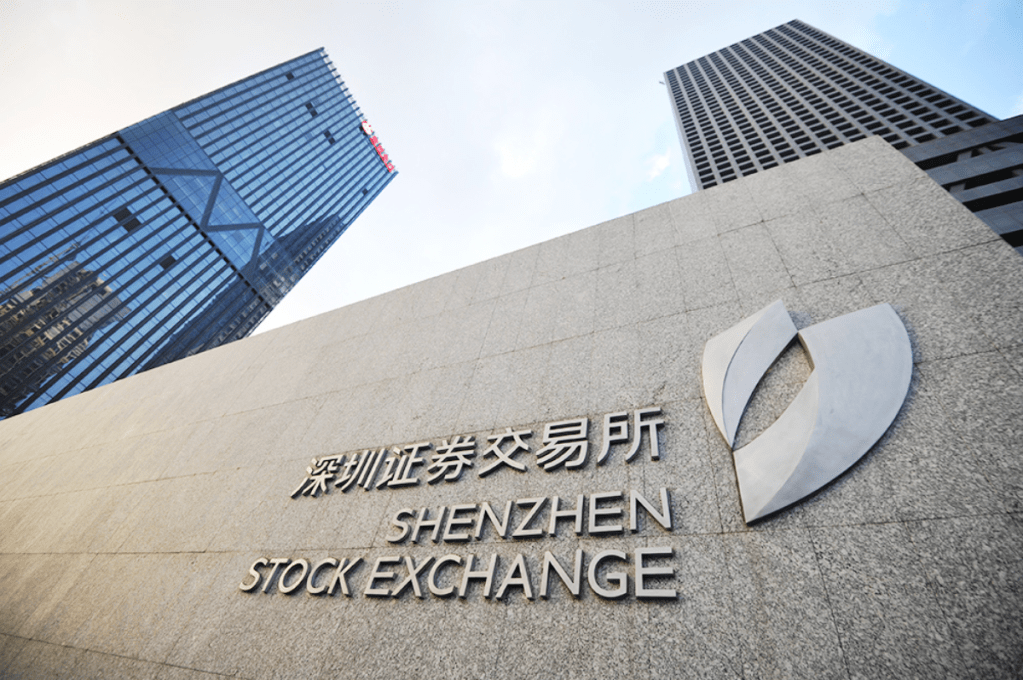
Recent fluctuations in China’s stock market have unsettled both consumer and investor sentiment, yet it would be premature to deem this period a full-blown crisis. Investors are advised to proceed with caution due to the lingering anxieties surrounding China’s unstable real estate sector and elevated youth unemployment rates. Nevertheless, the significant growth potential inherent in China’s vast domestic market should not be hastily dismissed.
The recent diplomatic interactions, including the productive summit in California between President Joe Biden and President Xi Jinping, have slightly eased geopolitical tensions. Furthermore, Xi Jinping’s discussions in Beijing with U.S. business leaders, such as Apple’s CEO Tim Cook, particularly on topics like artificial intelligence, suggest potential stabilization in bilateral relations.
China’s investment in artificial intelligence, which ranks second globally behind the United States, and its leadership in industrial robot installations, which surpass the combined total of the rest of the world, are commendable. The country’s innovators are responsible for nearly half of the global patent applications, surpassing the outputs of the United States, Japan, South Korea, and Germany.
In efforts to stabilize the market and bolster investor confidence, China has implemented stricter regulations on short selling. Signs of effective coordination between China’s fiscal and monetary policies are emerging. Early in the year, the People’s Bank of China reduced the reserve requirement ratio for banks, with further reductions anticipated. Additionally, Beijing plans to allocate at least $137 billion in low-cost financing for public housing initiatives this year.
China’s rapid economic advancement has cultivated a middle-class population now exceeding 500 million, who have experienced significant prosperity. From 2017 to 2021, China’s luxury market expanded threefold, supported by the potential addition of 80 million middle-income earners by the decade’s end. Despite recent economic hurdles, it is crucial to recognize that China is transitioning towards a more sustainable economic model, increasingly propelled by domestic consumption and services.
Noteworthy are China’s achievements in the automotive sector, particularly in electric vehicle (EV) production, which nearly positioned it as the world’s largest car exporter last year. With substantial government backing, Chinese automakers have quickly outpaced international competitors in developing electric vehicles and integrating new smart technologies.
Concurrently, comparisons between China and India have intensified as India’s youthful demographic helped it surpass China as the world’s most populous nation in April 2023. India’s robust manufacturing and service sectors have shown significant growth, further highlighted by a 13-year high in the Purchasing Managers’ Index in September of the previous year. However, despite these advancements, India’s economic landscape, characterized by its vibrant democratic structure and high trade barriers, presents a stark contrast to China’s.
In financial markets, despite subdued expectations for an immediate recovery, some investors find China’s low market valuations—an end-February price-to-earnings ratio of approximately 9.44 and a price-to-book ratio of about 1.15 on the FTSE China RIC Capped Index—compelling as entry points into the world’s second-largest economy.
Moreover, China has been extending its global influence, particularly in Latin America, through strategic trade agreements, foreign investment, and loans, underlining the extensive reach of its international engagements. These endeavors underscore the expansive scope of China’s global influence, which remains significant and multifaceted.
In a recent analysis presented by China’s Commerce Minister, Wang Wentao, a concerning picture of global trade dynamics for the year 2024 was outlined, highlighting the troubling rise in trade protectionism and the escalation of geopolitical tensions as principal challenges. Despite these obstacles, China has reported significant growth in exports from its burgeoning sectors—namely electric vehicles, solar energy, and lithium batteries—which collectively achieved a 30% increase in exports year-over-year, amounting to approximately 139.3 billion USD. This growth has provided a vital boost to China’s economy amidst its struggles with a deep-seated property downturn, deflationary pressures, and waning investor confidence.
However, this surge in Chinese exports has stoked fears among developed nations about the potential flooding of their markets with low-cost imports, threatening domestic industries and jobs, particularly in the automotive and renewable energy sectors. In response, the European Commission is contemplating the imposition of heightened tariffs following an anti-subsidy investigation into Chinese electric vehicle production, alongside other protective measures for its solar panel manufacturing industry, including a potential anti-dumping inquiry.
On the other side of the Atlantic, the United States has implemented export controls on high-technology shipments to China, indicative of a broader strategy of “de-risking” among Western nations. This strategy involves diversifying import sources and tightening investment screenings to address national security concerns. Despite criticism from Beijing, which labels these actions as protectionist, Western commentators argue that China’s economic strategies have long been characterized by a mercantilist approach aimed at enhancing domestic supply chain self-sufficiency, often at the expense of foreign market access.
The tension between China and its major trading partners, particularly concerning electric vehicles, has prompted concerns about the potential for escalating trade conflicts. Both Wang Yong, a professor at Peking University, and George Magnus, an associate at Oxford University’s China Centre, have expressed apprehensions about the negative impacts of such disputes and the difficulty in finding resolutions within the current year.
The friction arises from the fundamental clash between the Chinese economic model—which integrates state policy and financial support with a vigorous private sector—and the market-oriented capitalism of the West. This divergence has been exacerbated by events such as the COVID-19 pandemic and geopolitical upheavals, which have compelled European leaders to reassess and diversify their supply chains, particularly for critical materials like rare earths that are dominated by China.
Moreover, the U.S. has taken significant steps to fortify its renewable energy manufacturing through legislative measures such as the Inflation Reduction Act signed by President Joe Biden, reflecting a global trend towards reducing economic dependencies on China. Nonetheless, European leaders maintain that their goal is not to decouple from China but to mitigate risks associated with over-reliance on Chinese imports, aiming to bolster resilience through diversified supply chains.
In response, Chinese officials have defended their trade and economic policies, attributing their industrial success to innovation rather than mere state intervention. Despite this defense, there is a growing acknowledgment within China of the need for policies that reduce economic dependency on foreign nations, a stance that has been particularly emphasized under the leadership of Xi Jinping. This shift towards self-reliance has been both a historical continuity and a strategic adaptation to contemporary global economic conditions.

 Yuxin Hu
留下评论