Though I am travelling and studying abroad, my heart has not left China for a single moment, for its beautiful history, rich culture and nurturing me.
雖然我旅居海外,我的心從未離開過中國,哪怕一刻。因為她的美麗歷史,深厚文化,以及對我的滋養。
Learn such wisdom for life. 用終生修煉。
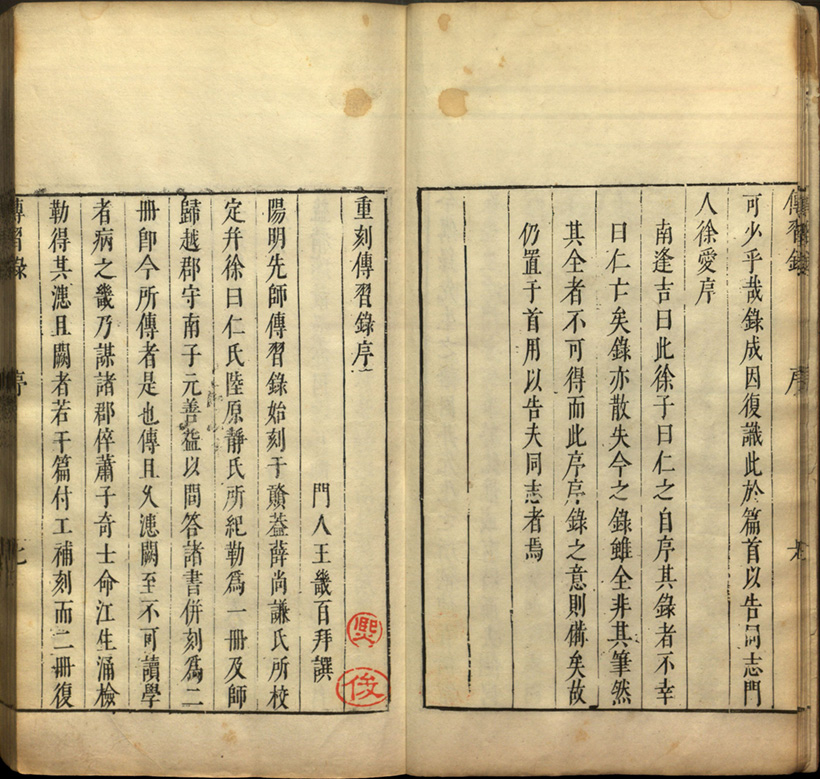
The “Instructions for Practical Living” was authored by Wang Yangming of the Ming Dynasty, emphasizing the concept of the unity of knowledge and action, and the idea that one’s nature is self-sufficient. This work holds a significant position in the history of Chinese philosophy and has a profound influence. Wang Yangming’s theory of “innate knowledge” stresses that an individual’s internal moral compass can directly guide their behavior, believing that everyone is born with this moral sense, and that one can achieve true self through understanding their inner nature. This viewpoint has had a deep impact on Confucian thought in China, and has significantly influenced later thinkers and scholars. This emphasis on internal cultivation has also affected, to some extent, the values and ethical views of Chinese society. His works were circulated among many great figures in China and other Asian countries, such as Mao Zedong and Sun Yat-sen, or were greatly integrated into contemporary Japanese culture.傳習錄為明代王陽明先生所作,強調知行合一,吾性自足的觀念。這部著作在中國哲學史上佔有重要地位,影響深遠。王陽明提出的「良知」理論,強調個人內在的道德良知能夠直接指導人們的行為,認為每個人天生都具有良知,並且能夠通過瞭解自己內在的本性來實現真正的自我。這一觀點對於中國儒家思想有著深遠的影響,也在很大程度上影響了後世的思想家和學者。這種強調內在修養的觀念,也在一定程度上影響了中國社會的價值觀念和倫理道德觀念。他的作品曾經被許多中國偉人或者其他亞洲國家所傳閱,例如毛澤東、孫中山等,或極大程度的整合進了當今的日本文化。
My knowledge of Chinese studies is modest; below are sentences or paragraphs from “Instructions for Practical Living” that deeply inspired me when I read them at the age of twenty-one in the Pembroke College Library at Cambridge University, which I share with you. Finished in Cambridge, MA.
我國學知識淺薄,以下為我二十一歲時,於劍橋大學彭布羅克學院圖書館閱讀傳習錄時摘抄的深度啟發我的句子或段落,分享與你。於馬薩諸塞劍橋完結。
This excerpt is prepared for beginners who have no knowledge in The “Four Books and Five Classics”. The true philosophical essence to be comprehended requires understandings in the “Four Books and Five Classics”. Otherwise, the most deep and essential philosophical arguments presented in this collection can not be learnt. Still, these sayings are inspirational. 這篇摘錄是為對「四書五經」無所知的初學者準備的。 真正的哲學本質的領悟需要對「四書五經」的理解。 否則,就無法學習這本集所提出的最深刻、最本質的哲學論證。 儘管如此,這些摘錄還是很有啟發性的。
Any advice is welcome. May I beg your pardon for any mistakes or mis-translations in this excerpt. 歡迎任何建議。希望能夠包容任何錯誤。
未有知而不行者,知而不行,只是未知。
There has never been one who knows but does not act; to know but not act is simply not to know.
- 須先有根,然後有枝葉。One must first have roots, and then there will be branches and leaves.
One must cut down this tree, leaving no fine roots behind, to finally stop the growth of the undesirable species.
須用伐去此樹,纖根勿留,方可終止嘉種。
When first planting the root, one should only focus on nurturing and watering, without thinking of branches, leaves, flowers, or fruits. What use is there in such idle thoughts? Just do not forget the effort of cultivation, fearing the absence of branches, leaves, flowers, and fruits.
初種根時,只管栽培灌溉,勿作枝想,葉想,花想,勿作實想,懸想何益?但不忘栽培之功,怕沒有枝葉花實。
Rather than tilting countless amounts of water without a source, it is better to draw well water from a source, even if it’s just a few feet deep, to ensure a never-ending supply.
與其為數傾無源之水,不若未數尺有有源頭之井水,生意不窮。
The natural intent of heaven and earth, like that of flowers and grass, never distinguishes between good and evil.
天地生意,花草一般,何曾有善惡之分。
The one who plants trees must cultivate the roots; the one who cultivates virtue must nurture the mind and character. To desire the tree’s growth, one must trim its excessive branches from the beginning.
栽樹的人必須培養樹根,修德之人必須休養心性。慾樹之長,必與始時刪其繁枝。
Generally, the nature of children is to enjoy playing and to dread restraint, like the initial sprouting of grass and trees, which thrive when relaxed and wither when constrained. Nowadays, in educating children, one must inspire them towards enthusiasm and joy. Then their progress will be unstoppable. As with timely rain and spring breezes that moisten and stroke the trees, causing all to sprout and exceed naturally, growing day by day, month by month; whereas if struck by frost and stripped by cold, the vitality becomes bleak, and the days lead to withering.
大抵童子之情,樂嬉遊而憚拘檢,如草木之始萌芽,舒暢之則條達,摧撓之則衰痿。 今教童子,必使其趨向鼓舞,中心喜悅,則其進自不能已。 譬之時雨春風,沾被擦木,莫不萌動發越,自然日長月化;若冰霜剝落,則生意蕭索,日就枯槁矣。
The teacher said, “Your illness has flared up again!” He then explained, “This is the root of your major illness in life. It’s like planting a large tree within a square of land; the nourishment from rain and dew, the strength from the soil’s veins, only nourish this big root. Even if you want to plant fine grains around it, they are overshadowed by the leaves of this tree and entangled by its roots below. How can they grow properly? You must cut down this tree, leaving no fine roots behind, only then can you plant fine seeds. Otherwise, no matter how much you till and mound the soil, you’re just nourishing this root.”
先生曰:「爾病又發!」因喻之曰:「此是汝一生大病根。譬如方丈地內種此一大樹,雨露之滋,土脈之力,只滋養得這個大根,四傍縱 要種些嘉穀,上面被此樹葉遮覆,下面被此樹根盤結,如何生長得成?須用伐去此樹,纖根無留,方可種植嘉種,不然任汝耕耘培壅, 只是滋養得此根。”
The teacher said: “In our generation, we only achieve knowledge according to our limitations. Today, the conscience sees it like this, and only expands it to the end based on what it knows today; tomorrow the conscience will be enlightened again, so it expands it to the end based on what it knows tomorrow. That’s how it is.” Jingyi’s work. When discussing learning with others, you must also follow the limits of others. For example, if a tree has these sprouts, only use this water to irrigate. When the sprouts grow, add more water, from arching the handle to hugging, the irrigation is all done. Follow its limits. If there is a bucket of water in some small sprout, it will be poured over, and it will be destroyed.”
先生曰:「我輩’致知’,只是各隨分限所及。今日良知見在如此,只隨今日所知擴充到底;明日良知又有開悟,便從明日所知擴充到底。如此方是’ 精一’功夫。與人論學,亦須隨人分限所及。如樹有這些萌芽,只把這些水去灌溉,萌芽再長,便又加水,自拱把以至合抱,灌溉之功皆是 隨其分限所及。若些小萌芽,有一桶水在,盡要傾上,便浸壞他了。”
- 克己 Practice
Self-restraint begins in a state of confusion and ignorance, aimlessly consuming and living without clarity or insight, spending days in a daze, merely dreaming through daylight. The mechanisms of heaven and earth never pause for a single breath, yet they are governed by a master, thus there is no before or after, no rush or delay. Despite thousands of changes and transformations, the master remains constant. People are born with this understanding.
懵懵而兴,蠢蠢而食,行不著,习不察,终日昏昏,只是梦昼。天地气机,元无一息之停,然有个主宰,故不先不后,不急不缓。虽千变万化,而主宰长定,人得此而生。
Nowadays, in the midst of conversation, though one may only discuss the principle of Heaven, unknowingly, in a flash, many personal desires have already emerged. Indeed, there are those that stealthily arise without one’s awareness. Even with diligent scrutiny, they are still not easy to detect.
如今一說話之間,雖只講天理。 不知心中倏忽之間,已有多少私慾。 蓋有竊發而不知者。 雖用力察之,尚不易見。
In essence, spirit, morality, and actions are primarily about restraint and consolidation; dispersion is only a last resort. This principle applies to heaven, earth, humans, and all things alike.
精神、道德、言動,大率收斂為主,發散是不得已,天、地、人、物皆然
If you can extinguish desires for sensory pleasures, fame, and profit, leaving only the pure essence of the mind, what thoughts or worries could you possibly have? This is the state of serene inaction, of potential unmanifested, where one feels and thereby becomes attuned, acts and hits the mark, and things respond in kind.
汝若于色,名,利等心,一切皆灭,光光只是心之本体,看有甚思虑?此便是寂然不动,未发之中,感而遂通,发而中节,物来顺应。
If you truly care for the self that is your physical body, you must use your true self to vigilantly avoid seeing what should not be seen and fearing to hear what should not be heard, lest you lose even a bit of it. The slightest arising of impropriety feels like cuts and pricks, necessitating the removal of the knife and the withdrawal of the needle. This is the heart of acting for oneself, which enables self-restraint.
汝若真为了那个躯壳的己,必须用这个真己,戒慎不睹,恐惧不闻,唯恐亏损了他一些。才有一毫非礼萌动,便如刀割针刺,必须去了刀,拔了刺。这才是有为己之心,方能克己。
Self-restraint requires the complete removal of all impurities, leaving not a trace behind. If even a trace remains, it attracts all kinds of evils.
克己需要掃除墎清,一毫不存,方是。 有一毫在,則眾惡相引而來。
Without the effort of self-restraint, the principle of Heaven will never reveal itself.
若不用克己功夫,天理终不自见。
It is not known that personal desires grow daily, like dust on the ground, accumulating layer upon layer if not swept away daily.
殊不知私欲日生,如地上尘埃,一日不扫便又有一层。
If one seeks within, understanding the essence of one’s own mind, then there is no moment or place where this path does not exist. The mind is the Way, and the Way is Heaven. To know the mind is to know the Way, to know Heaven.
若解向里求,见得自己心体,则无时无处不是此道。心即道,道即为天。知心则知道,知天。
As long as the moral conscience is clear, even if engaged in worldly affairs, it will not burden the mind. Any burden is easily noticed and thus can be overcome. For example, while studying, if the conscience recognizes that a desire for strong memory is misguided, then eliminate it; if there’s an impatience for quick progress, eliminate it; if there’s a tendency to boast or compete frivolously, eliminate it. In this way, one is always in communion with the sages, embodying a heart pure with the principle of Heaven. Whatever one studies, it is merely a means to cultivate this heart. Where then is the burden?”
只要良知真切,雖做舉業,不為心累。 總有累,亦易覺克之而已。 且如讀書時,良知知得強記之心不是,即克去之;有欲速之心不是,即克去之;有誇多鬥靡之心不是,即克去之。 如此亦只是終日與聖賢印對,是個純乎天理之心。 任他讀書,亦只是調攝此心而已。 何累之有?
- 情绪 Emotion
A father’s love for his daughter is naturally profound, yet the principle of Heaven has its own balance; to exceed this is to indulge in personal desires. One only needs to recognize the essence of the heart, naturally increasing or decreasing not even by a hair’s breadth. Generally, the emotions stirred by the seven feelings are mostly excessive, rarely are they not.
父之爱女,自是至情,然天理自有中和处,过即是私意。人但要识得心体,自然增减分毫不得。大抵七情所感,多只是过,少而不即。
Joy is the fundamental nature of the heart, although it is different from the joy among the seven emotions, it is not outside the scope of these emotions. Even though sages have their true joy, it is also something common people possess, yet common people are unaware of it. Instead, they seek out many sorrows and troubles, adding confusion and abandonment to themselves. Even in sorrow and abandonment, this joy is never absent; but with one enlightened thought, turning back to sincerity, then it is immediately present.
樂是心之本體,雖不同於七情之樂,而亦不外於七情之樂。 雖則聖賢別有真樂,而亦常人之所同有,但常人有之而不自知,反自求許多憂苦,自加迷棄。 雖在憂苦迷棄之中,而此樂又未嘗不存,但一念開明,反身而誠,則即此而在矣。
How could a person’s heart not experience anger and annoyance? It is only that one should not ‘hold onto it’. When ordinary people get angry, they cling to a certain thought and become excessively angry, no longer embodying the impartial and generous nature. Therefore, when one is angry or annoyed, one fails to be correct. Nowadays, in the face of annoyances, one should simply respond naturally to situations without clinging to any thoughts, thus the heart remains impartial and generous, attaining its true nature. For example, when seeing others fight outside, if someone is in the wrong, my heart also gets angry; yet, although angry, this heart remains open and untroubled by any qi disturbance. Only when one can be angry like this, is it correct.
忿懥幾件,人心怎能無得? 只是不可‘有所’耳。 凡人忿,著了一分意思,便怒得過當,非廓然大公之體了。 故有所忿懥,便不得其正也。 如今於凡忿懥等件,只是個物來順應,不要著一分意思,便心體廓然大公,得其本體之正了。 且如出外見人相鬥,其不是的,我心亦怒;然雖怒,卻此心廓然,不曾動些子氣。 如今怒人亦得如此,方才是正。
The fundamental nature of joy, anger, sorrow, and happiness is inherently balanced and moderate. Once one imposes personal intentions upon them, they become excessive or insufficient, and thus biased.
喜、怒、哀、樂本體自是中和的,才自家著些意思,便過不及,便是私。
- 內心紛擾 Internal Disturbances
When practicing during the day, if you feel disturbed, then sit quietly; if you feel too lazy to read, then force yourself to read. This too is treating the ailment with the appropriate remedy.
日間功夫,覺紛擾,則靜坐;覺懶看書,則且看書。 是亦因病而藥。
It is precisely the intention to seek tranquility that leads to greater restlessness. The wandering mind is always moving, but the observing mind is not. Constant observation leads to a state of both constant motion and stillness, the reason why heaven and earth endure endlessly without ceasing. The observing mind truly observes, and the wandering mind is also observed. ‘If it does not differentiate between entities, then its creation of entities never stops.’ Any momentary pause means cessation, not the ceaseless study of utmost sincerity.
是有意於求寧靜,是以愈不寧靜耳。 夫妄心則動也,照心非動也。 恆照則恆動恆靜,天地之所以恆久而不已也。 照心固照也,妄心亦照也。 「其為物不二,則其生物不息。」有刻暫停則息矣,非至誠無息之學矣。
Though it may sometimes be obscured, its essence never ceases to be clear. One only needs to observe it. To say that the moral sense also has a beginning is to imply that it is sometimes absent, which does not speak of its true nature.
虽有时而或蔽,其体实未尝不明也。察之而已耳。若谓良知亦有起处,则是有时而不在也,非其本体之谓耳。
The workings of heaven and earth never pause for a single breath. Yet, there is a master controller, hence there is no before or after, no haste or delay. Despite thousands of changes and transformations, the master remains constant, and people are born of this principle. If the master controller is fixed, moving with the operation of heaven ceaselessly, even amidst thousands of interactions, there remains a composed ease, what is called ‘The sovereign of heaven is serene, and all things follow its command.’ Without a master controller, it’s just this energy running wild, how can it not be busy?
天地氣機,元無一息之停。 然有個主宰,故不先不後,不急不緩,雖千變萬化而主宰常定,人得此而生。 若主宰定時,與天運一般不息,雖酬酢萬變,常是從容自在,所謂‘天君泰然,百體從令’。 若無主宰,便只是這氣奔放,如何不忙?
This is merely knowing how to cultivate tranquility without applying the effort of self-discipline. In this way, when faced with situations, one will easily falter. One must be tempered through experiences to stand firm, only then can one ‘remain calm both in stillness and in action’.
是徒知靜養,不用克己功夫也。 如此,臨事便要傾倒。 人須在事上磨,方立得住,方能’靜亦定,動亦定’。
When one maintains a state of tranquility, can it be considered ‘before action has arisen’? The teacher said, ‘Nowadays, when people concentrate, they only manage to calm their breath. Even at times of tranquility, it’s only the breath that is calm, which cannot be considered ‘before action has arisen’.’ He was asked, ‘Isn’t tranquility the goal, and also the effort needed to achieve it?’ He replied, ‘The real effort lies in eliminating human desires and preserving the principle of Heaven. During tranquility, with every thought, remove human desires and preserve the principle of Heaven; in action, with every thought, remove human desires and preserve the principle of Heaven, regardless of being in tranquility or not. If one relies on that tranquility, not only will there gradually arise a preference for tranquility over action, but many ailments and pains are merely lurking and can never be completely eliminated, and will still proliferate when faced with situations. If adhering to the principle is the main focus, why wouldn’t one be tranquil? If making tranquility the main focus, it does not necessarily mean one will adhere to the principle.
寧靜存心時,可為未發之中否」?先生曰:「今人存心,只定得氣,當其寧靜時,亦只是氣寧靜,不可以為未發之中」。 曰:「未便是中,莫亦是求中功夫」?曰:「只要去人欲,存天理,方是功夫。 靜時念念去人欲、存天理,動時念念去人欲、存天理,不管寧靜不寧靜。 若靠那寧靜,不惟漸有喜靜厭動之弊,中間許多病痛,只是潛伏在,終不能絕去,遇事依舊滋長。 以循理為主,何嘗不寧靜? 以寧靜為主,未必能循理」
- 命運 Fate
Whether one ends up impoverished or prosperous, with a short or long life, there is a fate involved, and I should not be disturbed by this.
得窮通夭壽有個命在,我亦不必以此動心。
If originally wealthy and noble, conduct yourself in wealth and nobility; if originally poor and lowly, conduct yourself in poverty and lowliness; if originally a barbarian, conduct yourself as a barbarian; if originally in distress, conduct yourself in distress. A gentleman finds contentment in any situation without losing his composure.
素富貴,行乎富貴;素貧賤,行乎貧賤;素夷狄,行乎夷狄;素患難,行乎患難。 君子無入而不自得焉。
事天,佚命。
- 道與天 Taoism
The mind is the principle itself. When this mind is free from personal desires, it is the principle of Heaven. There is no need to add anything externally.
心即理也。 此心無私慾之蔽,即是天理。 不須外面添一分。
The mind of a sage is like a bright mirror, simply illuminating, thus responding to stimuli without obstruction, reflecting everything without omission. There is no form from the past that remains, nor is there a form yet to be reflected that is already present.
聖人之心如明鏡,只是一個明,則隨感而應,無物不照。 未有已往之形尚在,未照之形先具者。
The utmost good is the original nature of the heart. Even a slight excess over this original nature is already evil.
至善者,心之本体。本体上才过当些子,便是恶了。
The heart is one; when it is not mixed with personal desires, it is called the heart of the Dao. When it is mixed with falsehoods of men, it is called the human heart.
心一也,未雜於人謂之道心,雜以人偽謂之人心。
- 朋友 Friends
In dealing with friends, strive to be humble and gain benefits; dominating others will lead to losses.
处朋友,务相下而得益,相上则损。
Disordered speech is also sufficient to reveal that the mind is not composed.
言語無序,亦足以見心之不存
A gentleman learns for his own sake and never worries about being deceived by others. He always remains true to his moral conscience; he never worries about others not trusting him, as he always trusts in his moral conscience; he never seeks to expose deceit or distrust in others, but always strives to be aware of his own moral conscience. Therefore, by not deceiving, one’s moral conscience remains unfeigned and sincere, ‘For sincerity leads to enlightenment’; by trusting oneself, one’s moral conscience remains unconfused and clear, ‘For clarity leads to sincerity.’ Clarity and sincerity generate each other, hence the moral conscience is always aware, always illuminating. Like a bright mirror hanging, objects coming towards it cannot hide their beauty or ugliness. Why? By being sincere and not deceiving, there is no room for deceit, and if there is deceit, it is recognized; by trusting oneself and being clear, there is no room for distrust, and if there is distrust, it is recognized. This is what is meant by ‘ease in recognizing dangers and simplicity in recognizing obstacles,’ what Zi Si called ‘With utmost sincerity, one can foresee,’ implying the effects of striving for sincerity are as if one had divine foresight. Yet, Zi Si speaks of ‘as if divine’ and ‘being able to foresee’ as two separate things, suggesting these are the benefits of striving for sincerity, explained for those who are not yet able to foresee. If we talk about utmost sincerity itself, its miraculous use is referred to as ‘divine’, without needing to say ‘as if divine’; with utmost sincerity, there is no knowing and not knowing, no need to say ‘being able to foresee.’”
君子學以為己,未嘗虞人之欺己也,恆不自欺其良知而已;未嘗慮人之不信己也,恆自信其良知而已;未嘗求先覺人之詐與不信也,恆務自覺其 良知而已。 是故不欺則良知無所偽而誠,「誠則明」矣;自信則良知無所惑而明,「明則誠」矣。 明、誠相生,是故良知常覺、常照。 常覺、常照則如明鏡之懸,而物之來者自不能遁其妍媸矣。 何者? 不欺而誠,則無所容其欺,苟有欺焉而覺矣;自信而明,則無所容其不信,苟不信焉而覺矣。 是謂“易以知險,簡以知阻”,子思所謂“至誠如神,可以前知”者也。 然子思謂“如神”,謂“可以前知”,猶二而言之,是蓋推言思誠者之功效,是猶為不能先覺者說也。 若就至誠而言,則至誠之妙用即謂之“神”,不必言“如神”;至誠則無知而無不知,不必言“可以前知”矣。
The teacher said, ‘In general, with friends, there should be less pointing out faults and more guiding, supporting, and encouraging. This is the way.’ Later, he also cautioned Jiuchuan Yun, ‘When discussing learning with friends, one must be flexible, humble, and adopt a generous attitude.
先生曰:“大凡朋友,須箴規指摘處少,誘掖獎勸意多,方是。”後又戒九川雲:“與朋友論學,須委曲謙下,寬以居之。”
- 學 Study
Zixia devotedly believed in the sages, while Zengzi sought answers within himself. Devoted belief is indeed important, but it does not compare to the earnestness of introspection.
子夏篤信聖人,曾子反求諸己。 篤信固亦是,然不如反求之切。
However, ordinary people cannot avoid having personal biases and obstacles, hence the necessity to apply oneself diligently in understanding and investigating things.
然在常人不能無私意障礙所以須用致知格物之功。
Wherever discoveries are made, there one should learn to preserve the principle of Heaven.
隨他發見處,即就在那上面學個存天理。
Everything the sages say, though extremely subtle, is fundamentally accessible to all learners. Students should apply themselves diligently in the basics, and naturally, they will reach higher understanding without needing to seek a separate method for advanced learning.
凡聖人所說,雖極精微,俱是下學。 學者只從下學裡用功,自然上達去,不必別尋個上達的工夫。
The Way does not differentiate between the refined and the coarse; it is people’s perceptions that see the refined and the coarse.
道無精粗,人之所見有精粗
Ignorance originally comes without ignorance, awareness originally comes without awareness, yet without awareness, one eventually becomes completely obscured.
知來本無知,覺來本無覺,然不知則遂淪埋。
If one studies apart from real situations, such study is empty.
若离了事物为学,是为空。
Whenever understanding is not achieved, and behavior does not change, one must reflect upon oneself to grasp the essence. Then, one can achieve understanding. Once the essence of the heart is clear, the Dao is clear.
凡明不得,行不去,須反在自心上體當。 即可通。 心體明即是道明。
As for eating and drinking, the purpose is merely to nourish the body; after eating, one must digest. If one merely accumulates without digesting, it becomes an obstruction, how can it contribute to the growth of flesh and skin? Later generations of scholars, with their broad knowledge and vast understanding that remains undigested within them, suffer from the illness of overconsumption.
凡飲食只是要養我身,食了要消化。 若徒蓄積在肚裡,便成痞了,加何長得肌膚? 後世學者博聞多識,留滯胸中,皆傷食之病也。

 Yuxin Hu
留下评论